Showing posts with label Rochester. Show all posts

Monday, 29 August 2011

Jane Eyre, the latest movie. Have you seen it?


My followers know I'm a fan of the Byronic Hero and even did a series on these moody, broody old-fashioned masculine hunks. So when the latest version of Jane Eyre hit the big screen I was there! And it didn't disappoint (Monsieur Aussie swears he wasn't asleep, he was just breathing heavily.)

A virginal heroine who's in thrall to a powerful and vaguely threatening older man has always been the stuff of melodrama. Today's teenagers lap up Twilight, (the latest incarnation); teens from earlier generations lapped up delicious novels such as Jane Eyre and Wuthering Heights. Charlotte Bronte's seminal gothic novel on which the movie Jane Eyre is based is ancient by Twilight standards; it was first published in 1847.

History of Jane Eyre movies

From the beginning of cinema, filmmakers have been attracted to this book. The first known version was made in 1910, one of two that year. At least four more versions were made during the silent film era. The most celebrated version until now was the 1943 production starring Joan Fontaine and Orson Welles, but I preferred the 1996 Franco Zeffirelli version with Charlotte Gainsbourg as Jane and William Hurt as Rochester.

Skip along if you're not into trivia as there's more! There's been an Indian version (Sangdil, 1952), at least eight television versions and the Australian film Wide Sargasso Sea (1992) filled in Rochester's back story. Hey, don't forget Jacques Tourneur's I Walked with a Zombie, a horror film made the same year as the Fontaine-Wells version which deals with Bronte's basic story in very interesting ways.

The latest version of Jane Eyre


"I am no bird; and no net ensnares me; I am a free human being with an independent will."
Charlotte Bronte, Jane Eyre
                                     
So what about the latest version? Well, it stars the luminous Australian-born actress Mia Wasikowska as Jane and I think she's marvellous. You might remember her from Tim Burton's Alice in Wonderland. I think Jane Eyre was the role she was born to. She radiates solemn intelligence and wide-eyed innocence along with pride and idealism. Edward Rochester, the mysterious owner of Thornfield Hall is Michael Fassbender, well cast also. His first appearance on his black steed is splendid, and creates exactly the right mood of excitement and danger. The love affair is in first-class hands.

I assume if you're reading this far, you know the story. In the book Rochester is far less attractive and Jane is truly Plain Jane; not in this film. The story is told non-sequentially, beginning where Jane flees Thornfield into a wild, storm-tossed landscape, beautiful but dangerous moors. Flashbacks are used to take us back to Jane's childhood, orphaned and miserable. I'm glad the filmmaker didn't spend too long at the hideous charity school Lowood as the book descriptions have haunted me since I first read the novel as a young teenager. How could adults be so cruel to children? We do see poor, doomed Helen Burns...

When Jane is sent to Thornfield as governess to Adele (delightfully played by Romy Settbon Moore), the ward of the usually-absent Rochester, she finds a friend in housekeeper Mrs Fairfax (Judi Dench wonderful as usual.)
"Why did you run away? Why didn't you come to me girl? I would have helped you."

The British class system of the 19th Century is captured in detail and the landscape is given a poet's vision - beautiful and lowering.

To me, this is the best version yet! I hope you go see it. I can't wait to re-read the novel yet again.


Tuesday, 26 April 2011

Byronic Hero Series, Part 4 - Heathcliff from Wuthering Heights compared to Edward Cullen and Twilight.


The Byronic Hero

For those of you who are visiting my posts for the first time, I have been finding parallels between the recent blockbuster series Twilight and checking out how clever author Stephenie Meyer has drawn from the classics - Pride and Prejudice, Jane Eyre and Wuthering Heights in particular. The Twilight hero, Edward, (sorry Team Jacob) shares many of the attributes of the Byronic Hero (read my first post of the series below if you want the background.)

Darcy's Byronic Hero has an overbearing ego, Rochester exhibits moody paternalism, but Heathcliff from Emily Bronte's Wuthering Heights, is exotic and savage, in contrast to the civility of Imperial Britain. Nelly describes Heathcliff after he returns from making his fortune: "...half-civilized ferocity lurked yet in the depressed brows and eyes full of black fire..." His innate wildness has not been subdued.


Heathcliff's wildness sometimes manifests as brutality. He becomes monstrously cruel, killing a lapdog, and taunting Linton and Catherine. Edward Cullen's "monstrosity" is his vampirism, against which he fights a daily battle. Edward never exhibits the unrestrained cruelty of Heathcliff, but he does admit "a typical bout of rebellious adolescence" where he hunted and killed humans." (Twilight, 342.) Even though Edward has become a "vegetarian" vampire, the reader knows he possesses the barbarous power to kill James, Victoria, or anyone who would hurt Bella.

Wuthering Heights is the only one of Bella's novels mentioned in each of the Twilight Saga's four books, with one exception, New Moon. This is a little odd, since the plot of New Moon closely mirrors Wuthering Heights more so than any of the other books. Like Wuthering Heights, New Moon begins with Edward and Bella's carefree happiness, the English moors replaced with meadows outside Forks. Edward abandons Bella in New Moon, which emotionally destroys her and she begins to recklessly act out. She takes to riding motorbikes and cliff-diving. But despite all this, she still rushes to his vampire's deathbed (in Volterra) driven by love. When Edward returnds to Bella he says: "As if there were any way that I could exist without needing you!" (New Moon, 510.) Bella sees her situation in Eclipse as similar to the plot of Wuthering Heights when she is torn between Jacob and Edward, just as Cathy is torn between Edgar and Heathcliff.

Edward himself identifies with Heathcliff during Eclipse. He denigrates Heathcliff at first, calling Heathcliff and Cathy "ghastly people who ruin each other's lives." He later changes his mind. "The more time I spend with you, the more human emotions seem comprehensible to me. I...can sympathise with Heathcliff in ways I didn't think possible before." (Eclipse, 28,265.)


Heathcliff is likened to a vampire by Nelly when he roams the moors alone at night. When Edward re-reads Bella's copy of Wuthering Heights, he leaves the book open where it shows Heathcliff describing his rival Edgar Linton in almost vampiric terms "Had he been in my place...though I hated him with a hatred that turned my life to gall, I never would have raised a hand against him...I never would have banished him from her society, as long as she desired his. The moment  her regard ceased, I would have torn his heart out, and drank his blood!" Edward, however, says he sympathises with Heathcliff, perhaps becuase he is overcoming his Byronic savagery by trying to become more human.

The flip side of the Byronic hero's savagery is his passionate attachment to his love. As children, Heathcliff and Cathy are inseparable, appearing to share even the same soul as they run wild over the moors. Their perfect happiness is ruined when Cathy convalesces at Thrushcross Grange and falls under the influence of the Lintons, determining to marry Edgar Linton, while at the same time saying: "I am Heathcliff-he's always, always in my mind-not as a pleasure, any more than I am always a pleasure to myself-but as my own being." It is not until Cathy is dying that Heathcliff reveals the depth of his ardor. He rushes to Cathy's sick room, "he gnashed at me, and foamed like a mad dog, and gathered her to him with greedy jealousy" Nelly says. "Be with me always-take any form-drive me mad! Only do not leave me in this abyss, where I cannot find you! Oh, God! It is unutterable! I cannot live without my life...without my soul!" Edward quotes this final line of Heathcliff's, after Bella's quotes Cathy's lament to him: "If all else perished, and he remained, I should still continue to be; and if all else remained, and he were annihilated, the universe would turn to a mighty stranger." (Eclipse, 611.)


I hope you have enjoyed this series, and whether you agree or disagree with the parallels I've found, I hope you've found the posts enjoyable and thought more deeply about the classics and maybe are inpired to read Twilight if you haven't yet succumed. I recommend Twilight and History by Nancy Reagin if you'd like to read more.

Have you read any books that you can't help seeing parallels with well-known classics? Tell me about it...

Thursday, 21 April 2011

Rochester and Edward - Part 3 of the Byronic heroes series. How are they similar?

Go here if you're looking for my post for the A-Z Challenge. Currently showing is Q for Queenlsand. Next is R for ...and you won't want to miss this personal anecdote...

And a warm welcome to all my new followers who have joined me here at L'Aussie Writing. I appreciate each one of you and have visited you if there was a link, or if you left a comment.

Now onto our Byronic Hero. Today we compare Rochester and Edward Cullen.

Edward Rochester, the hero of Charlotte Bronte's Jane Eyre (1847), feels no guilt for wooing Jane, even though he is already secretly married. When Jane learns of the existence of the mad Bertha Mason, kept imprisoned in the attic at Thornfield Hall, Rochester says: "I am little better than a devil at this moment." He wants to keep Jane as his mistress, but Jane refuses and flees.

At the end of the novel when Jane returns to find a blind and maimed Rochester, he finally expresses some guilt that he is no longer worthy of Jane: "I am no better than the old lightning-struck chesnut tree in Thornfield orchard...And what right would that ruin have to bid a budding woodbine cover its decay with freshness?"

Rochester's guilt feelings are remarkably short-lived and he and Jane marry immediately.


Rather than being tormented by guilt, like many Byronic heroes, Rochester primarily suffers from the effects of his dark secret which renders him mysterious and frightening. Jane describes him as proud, sardonic, moody, imperious, morose. Just as Edward tends to brood, most often about how his vampirism will affect Bella, so too is Rochester melancholy, though he does not blame himself for his dark secret.


Rochester's isolation is reminiscent of Edward's ninety years without a mate: they both feel doomed to solitude. In Twilight, Alice tells Bella, "It's been almost a century that Edward's been alone. Now he's found you. You can't see the changes that we see, we who have been with him for so long. Do you think any of us want to look into his eyes for the next hundred years if he loses you?" (Twilight, 410-411.)

 Have you given any thought to the equation between the mad Bertha and Edward's vampirism?  When Jane tells Rochester about her vision of the woman with the "fiery eye", "lurid visage" and "gaunt head" who tears her wedding veil, she says it reminded her "of the foul German spectre - the Vampyre." Jane's descriptions of Rochester bear a strong resemblance to Edward - his "flaming and flashing eyes,: his "pale, firm, massive front: like "quarried marble," his face like "colourless rock," and "His eye...was a black eye: it had now a tawny, nay a bloody light in its gloom." Remind you of anyone?

Rochester tries to control the woman he loves, as does Edward. Citing their advanced ages, both Edward and Rochester often take charge of Bella and Jane. While Edward has ninety years on Bella (helped along by a bit of mental telepathy), Rochester says, "I claim only such superiority as must result from twenty years' difference in age and a century's advance in experience." Edward says: "I'm going to be a little...overbearingly protective...I wouldn't want you to think I'm naturally a tyrant." (Twilight, 328.)

Edward and Rochester feel compelled to confide in their love objects. Rochester: "Strange that I should choose you for the confidant in all this...(you) were made to be the recipient of secrets." Edward says: "Having you know about everythng, not needing to keep secrets from you. It makes me...happy." (Twilight, 344.)

There is relief for the Byronic hero as he unburdens his soul of terrible secrets: the absolute honesty that he shares with his love forges their unbreakable connection.

Here is a great blog post on the same topic. And here is another, specifically on Rochester.

With thanks to Nancy R Regin, "Twilight and History."


Monday, 18 April 2011

British Acting Royalty - Colin Firth (or was that Mr Darcy?) A deviation from the Byronic Hero series.


You’ve all been enjoying my little trip into Darcy Land so much that I sent a quick email off to Mr Darcy, er, Colin Firth and told him that there was quite a fan club in blogland and would he mind answering a few questions and he said “Oh, alright, as long as you don’t ask me any questions about that repressed upstart Mr Fitzwilliam Darcy. I’m trying to forget that nightmare. ”

So without further ado about nothing, I’ll share the interview.

DENISE: Mr Darcy, er sorry, Mr Firth, I’ve really relished your roles in Bridget Jones, Love Actually (especially when you dived in the water) and thought you were a hoot in Mumma Mia! Now which role is your favourite?

MR FIRTH: My favourite role is being a father. Do you want to hear about my offspring?

(I’ve been reading a lot of Pride and Prejudice sequels and for the life of me couldn’t remember his and Elizabeth’s kids’ names. Never mind, he was about to fill me in…)

DENISE: Er, yeah, of course. Now you and Eliza…

MR FIRTH: (Breaks in quite rudely) LIVIA and I have two sons – Luca, nine, and Matteo, seven. And I have a wonderful son Will, twenty. They’re my best performance yet.

DENISE: But kids can be so exhausting! Aren’t you worried you’ll lose your looks?

MR FIRTH: (Smirks) Exhausting! You want to try stammering your way through The King’s Speech. My God. I was in a physical battle. I was so tense my arm kept going to sleep. Truly. Those long speeches were hell. Not to mention all the swearing. I’m worried that the Queen will never give me a gong now that I’ve revealed how much her father swore when he was out of earshot.

DENISE: That film was something else. I liked the Aussie having the upper hand, er, sorry, that just slipped out. (Mr Firth nods, smirks) Ahem, how do you deal with all the adulation that being a sex symbol brings?

MR FIRTH: (Laughs uproariously) Sex symbol? Moi?  I say thanks for the smiles, but my heart belongs to my lovely Livia. I need my wife and children to keep my head from exploding. I hate being fawned over. (See, I’m really not like Darcy). I can’t tolerate inflated notions about self.

DENISE: Really? Look, I know you made me promise, but please Mr Firth, please, seeing you’ve brought up Mr Darcy yourself, I’m doing a series on Byronic Heroes and of course Mr Darcy features. So would you at least tell my readers if there’re any similarities between you and Mr Darcy? It’s an age-old question only you can answer.

MR FIRTH: (Sighs a Darcy sigh) Oh, if I must then. I don’t identify with Darcy at all! I’m open with my emotions. Being married to an Italian I’ve become much more exuberant. Nearly lost my British stiff upper lip altogether – although I’m mindful I might need it for the next role. You should see me sitting down to a lavish meal at a Tuscan table. Not a stiff upper lip in sight. Mr Darcy would faint with the horror. He could never let himself go enough to embrace that extraordinary appreciation of life, the repressed twit.

DENISE: Well, then, so off the subject of Mr Darcy. Tell us a little about your view of romance.

MR FIRTH: Sorry, I’m not the sort to sit and watch a weepy movie and sigh sweetly. I’m more interested in the hero overcoming obstacles.

DENISE: (Grasping at straws, not of the martini type) So who’s your favourite Byronic Hero? Darcy? Rochester? Heathcliff?

MR FIRTH: Xena. Are you including her in the series? You must. I’ll visit.

DENISE: Weelll, I was investigating Rochester next.

MR FIRTH: That two-timing sly secretive broody moody cad. Pah!


I hope you enjoyed my interview with the enigmatic Mr Firth or Mr Darcy. Whoever.

Stay tuned.

(In case any of you were completely hoodwinked by the evil Denise, sadly, this is a completely fictional interview.)


Catch Mr Rochester later in the week.

Denise :)


Friday, 8 April 2011

The Byronic Hero - Darcy, Rochester, Heathcliff and ...Edward.

I love the Byronic Hero, especially since I read 'Twilight History' by Nancy R Reagin. I hope you will find something to interest you too. If you're not a fan of the Twilight series (I admit I was late to the party,) chances are you've read and enjoyed Price and Prejudice, Jane Eyre and Wuthering Heights, all chock full of dashing Byronic heroes.

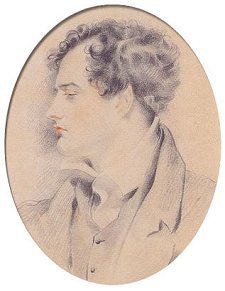
 Lord Byron, sketch by G. H. Harlow, c 1815

It's no accident that the Twilight saga was such a blockbuster. Stephenie Meyer has done her research, and throughout the story, her attention to detail is amazing. 'They' say that much of the explanation for the success of Twilight is Edward's inhumanly angelic face and perfect, marble body. Twilight satisfies because its universe is both like and unlike ours. Stephenie Meyer's world building has been thought out to the last detail, and casting Edward as the Byronic hero was her coup de grace.

The Byronic Hero: Darcy, Rochester, Heathcliff and…Edward


We all love him or hate him – he’s the tall, dark brooding hero. The Byronic hero, based on the fictional characters of author Lord Byron, is a mysterious man, intelligent, sophisticated, educated, magnetic, charismatic, socially and sexually dominant while at the same time being detached from human society. We suffer his moods accompanied by his bouts of temper. His past is often troubled and he is riddled with self-destructive secrets.

Lord Byron himself, according to his lover Lady Caroline Lamb, was ‘mad, bad and dangerous to know.’ Recent examples of this type include Batman, Dr Gregory House from the television series House, MD, and the late actor James Dean.

The Byronic hero is sometimes called an anti-hero because of his negative qualities. Gilbert and Gubar compare him to a bewitching monster like Milton’s Satan – “He is in most ways the incarnation of worldly male sexuality, fierce, powerful, experienced, simultaneously brutal and seductive, devilish enough to overwhelm the body and yet enough a fallen angel to charm the soul.”

Now to Twilight and how Stephenie Meyer has used Edward to embody the Byronic hero. The Byronic hero's mystery, moodiness and sensuality call to mind Bella’s reaction to Edward in their meadow: “I sat without moving, more frightened of him than I had ever been. I’d never seen him so completely freed of that carefully cultivated façade. He’d never been less human…or more beautiful. Face ashen, eyes wide, I sat like a bird locked in the eyes of a snake.” (Twilight, 264.)

At several points in the saga, Bella notes that Edward’s beauty is terrifying. She describes being captivated by Edward as “locked in the eyes of a snake,” yet she also describes him as an angel.

Early in their meeting, when Bella tries to get Edward to explain how he saved her from being crushed by Tyler’s van, Bella thinks, “I was in danger of being distracted by his livid, glorious face. It was like trying to stare down a destroying angel.” (Twilight, 65.) And in Breaking Dawn, she says, “His face glowed with an expression of triumph that I didn’t understand – it was the expression an angel of destruction might wear while the world burned. Beautiful and terrifying.” (730).

But...the Byronic hero is not simply seductive and strong, he is also tormented. He is well aware of his flaws even as he despises them in others; his introspection often leads him to black moods and self-destructive behaviour. Edward has a penchant for self-flagellation, as does Darcy, Rochester and Heathcliff. Pride and Prejudice and Wuthering Heights are explicitly mentioned in the saga. Foremost is Edward’s name. Bella comes across it in Austen’s works, leading her to wonder, “Weren’t there any other names available in the late eighteenth century?” (Twilight, 148.) In Wuthering Heights we have Edgar and Isabella Linton. In Jane Eyre, Rochester’s first name is Edward.


The Byronic parallels among Edward, Darcy, Rochester are many. I will continue to explore this topic next post.

Colin Firth's Mr Darcy