Wednesday, 15 June 2022

#JuneWEP - my #flashfiction, ESCAPE FROM MARIUPOL

Hi there!

Time for the June WEP contest. This prompt Please Read the Letter required no thought from me. I immediately imagined someone escaping conflict with a letter in their pocket.


Being a political animal, at the moment I struggle to write about anything but Ukraine, trying to imagine myself in the dire situations those poor people find themselves in. Here is my second story set in the Ukrainian war.
Sure, this is a work of fiction, but is based on first-person accounts from news agencies, so it is creative non-fiction, really. 

I won't ask you to enjoy my story; I ask you to be thankful for whatever life throws at you. We're diving into a global catastrophe - higher prices, higher inflation, famine, world unrest. The war in Ukraine has certainly added to our woes with lack of food and scarcity of energy directly attributed to the conflict.

Here is my #flashfiction. I apologize in advance that it's nearly 100 words over, but every time I edited, I thought of something else to add. 


ESCAPE FROM MARIUPOL
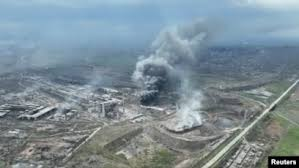
 

Steel plant after evacuation
rferi.org

Not trusting the cease fire, the Red Cross hurriedly provides a hot meal before herding us onto a bus out of the Azovstal Steel Plant. My heart aches with grief. I rub stiff fingers over the envelope in my pocket.  Is this letter my final link to my husband?

I love my city even in its hopeless state. The shells of gutted buildings, ruin, rubble, jagged timbers, sagging roofs, broken cement walls. I am proud of this outpost, this symbol of resistance. It is where I fell in love with my husband, Bohdan, in better, more hopeful times. I worked at the steel plant in peace time, doing quality control. When the shelling started, I stayed, like many others. Where else could I go? There was scarcely any water or food left in my bombed-out city.  
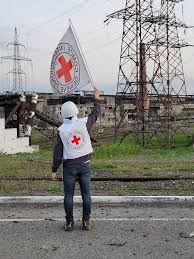
timesofisrael.com

A screech. A judder. My bus joins the convoy. Through the foggy window, I blink in the unaccustomed light, take a final look at the plant’s twisted steel, smouldering from the latest missile barrage, a never-ending pall of smoke rises from metal towers.

The big white bus lumbers along wrecked roads, past unspeakable detritus. My heart constricts wondering at the fate of hundreds still hiding underground.

Who would have thought these Soviet-era tunnels would become home for hundreds of civilians and soldiers, where every day, tanks, armoured vehicles and artillery tried to flush us out. Bohdan still lives in that hell of sprawling warrens of rail lines, warehouses, coal furnaces, factories, chimneys, subterranean tunnels. An enormous maze, a big city, really, dark and tangled. Will it become his tomb?

One of our saviours in her neat, clean uniform kneels on the floor and addresses me. “Valentyna Kovalenko? I hear you speak English. Do you mind answering a few questions?”

I nod, even though it is the last thing I want.

I expected you all to be jubilant leaving the destruction, but everyone is so quiet.”

I shake my head, struggle for words. “The terror of incarceration is not easily relinquished.”

She takes out a notebook, smiles kindly. “Please tell me about it.”

I don't hold back. “You had to have lived underground to understand our quietude. Living like moles in the dark. Five storeys below ground, sharing a bunker with seventy others. You cannot see in front of you, so you stay in familiar places. Eerie dimness. Dogs barking. Children screaming. Walls shaking. People dying. Missiles shook the plant; we shook with terror. Our bunker could have become our mass grave.”

“Terrifying.” She looks shaken herself. “Go on.”  

“Every day the same. The failing elderly, denied their medicines, gave their rations to children, to mothers, to pregnant women.”

“That’s extraordinary.” She scribbles in her notebook.

“Not really. We became accustomed to selflessness. ‘I have lived seventy years,’ an old man said, handing a packet to a mother cradling her whimpering child. ‘Take this.’

“That kind old man Oleksiy didn’t live to board a bus. A last glimpse of daylight denied him.” I knuckle my eyes with the heel of my hand. “It makes me so sad.”

She nods as if she understands. “Where did you get food? Water? Medicines?”

“Getting supplies inside the plant was risky. The men moved between destroyed buildings hunting for water and food. Buildings burned as they army-crawled through darkness with shells whistling overhead. The Ukrainian troops risked their lives locating formula for infants. When that ran out, they came up with semolina cooked over candles.”

“Extraordinary. I believe you have a husband, a medic, down there still.”

My heart pauses a beat. “Correct. My husband Bohdan has a make-shift clinic. He has run out of medicines. Now there is little he can do except offer succour to the wounded, the dying. ‘They are in hell, Valentyna,’ he told me when we held each other in a corner of my bunker during a particularly horrendous attack where the bombs fell every second. ‘More wounded every day. Some without legs or arms; all exhausted, hopeless.’"

“My God.” 

“Yes. God help us, we got used to the constant shaking as the steel works were slowly dismantled around us. Can you imagine how it was to sit in a wet, damp basement wrapped in layers of clothing to ward off the cold, wondering if your next breath was your last?”

The bus lurches from side to side, navigating the broken road. The Red Cross lady moves to the front, leaving me to wonder who those soldiers are ahead. My stomach clenches. What if our bus is shelled? What will happen to my husband’s letter? Our baby?

‘Oh, God, save us.’ The pious had cried and wept from daylight to dark in the bunker. ‘Let the missiles fly over our shelter. Deliver us from this evil.’ Whether from prayers or luck, no missile hit us because if it did, all of us would be done for, and I wouldn’t be telling this tale. Please God, let me make it out of here safely for my husband’s sake, for my child’s sake.

The bus stops. No. No. No. I breathe out when I see soldiers in UN uniforms. They guide our buses around burned-out Russian tanks.
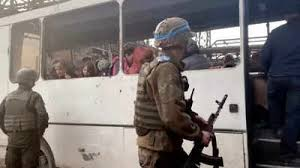
indiatimes.com

The lady is back. “Did you think you’d make it out alive, Valentyna?”

I shrug. “We heard rumours that a plan was underway to bring out women, children, the wounded. Some grew more fearful; some grew more hopeful. We knew the Russians shelled civilians in the north when they fled during a cease fire. Underground we had some protection from missile strikes at least. But we dreamed of being saved before we died of starvation. As you know, three times we tried to evacuate. Truces were broken. The most terrifying was that time we went outside and shooting started, so we scuttled back inside like rats.”

I turn my shoulder to the lady, lost in my thoughts. Finally. My turn came today...

...A final embrace. Bohdan handed me the letter then faded into blackness. He would stay to the end.

I clutch the letter in shaky fingers. On the grubby reused envelope, he has written: My beloved child. Please read this letter and know how your father loves you.

“Ukraine needs its Ukrainian heroes alive,” President Zelensky said in his address to the nation this morning.

Tears run down my cheeks. Will the heroes come out alive? Will Bohdan return to meet the child he sang to in my womb?

Nothing wrong with hope. It is all we have.

“Glory to Ukraine,” I whisper as the bus narrowly avoids toppling down a bomb-sized crater. “Glory to Ukraine.”

~*~

TAGLINE:

Some letters are written with the greatest of intentions, but may never be read.


WORDS: 1098

FCA

Please click on names in my sidebar, or visit WEP, to read more entries to the 'Letter' prompt.

If you love it, please tweet it;

WEP June's #WritingCommunity challenge #writingcontest Please Read the Letter #flashfiction https://dencovey.blogspot.com/2022/06/junewep-my-flashfiction-escape-from.html #WEPFF #amwriting #nonfiction #UkraineWar #Mariupol #AzovstalSteelPlant #war


Please join WEP in August for a challenge based on Moonlight Sonata.

Thank you so much for stopping by. I know blogger is messing up comments, so if you're unsuccessful and want to tell me about my story, please email me: den.covey@gmail.com


Denise


Wednesday, 1 June 2022

#IWSG JUNE POST - IS ANY WRITING EVER WASTED?

 Hello and welcome to the June IWSG where writers gather around the campfire and discuss the ups and downs of the writing life. It goes without saying that the purpose is to encourage each other. I know I always learn something! 

Alex's awesome co-hosts for the June 1 posting of the IWSG are SE White, Cathrina Constantine, Natalie Aguire, Joylene Nowell Butler, and Jacqui Murray! If time allows, please visit them.


I'm not answering the question today. 

I haven't been able to get Michael di Gesu's last IWSG post out of my head all month. Michael posed the question - 'when is it time to do a complete rewrite of your novel?' 

Michael went on to say - 'Originally I wrote this [Mommy Kay] as a memoir and had sent it to a top editor in NYC. She made several suggestions and I was almost finished when the person I am writing about decided she wanted changes. MAJOR changes.' Which to me, Denise, tore the heart out of the book.

My heart plummeted. What a situation for Michael to face. I know he'll come to a positive conclusion, but at the end of the day, he's potentially faced with three years of his writing life coming to naught. 

Or is he?

I've always believed that writing is the best way to learn your craft. I struggle to make sense of the craft books that line my shelves - I don't have the brain for them - people are always saying - read this or that - my brain fizzes, probably because I'm basically a pantser, or Discovery Writer - trying to be a plotter. Which only works for me as I have two sharp critique partners who love structural editing and walk me through the 'beats' of a good plot. Painful, but you've gotta do it as readers are smart people, they know when a 'beat' is missing.

So I think I wrote Ray Bradbury's 'million bad words' before my writing approached competency. I have about 5 books I haven't touched yet, but I'm powering on with new ideas. Now the flow is much easier. The six books I published in 2021? Most were begun in 2016 when I didn't have much of a clue - so a long hard road to getting it anywhere near right. 

There are mainly two lines of though re a deep re-write. The self-publishing gurus at 20Booksto20K FB group recommend forgetting about published stories full of holes which you recognize after you've become a better writer. Just get on and write the next book, and the next. Whereas others recommend making those changes that annoy you or perhaps reviewers found irritating. (For a list of sites which help the self-publishing journey, click on the image in my sidebar where I gathered them together for Damyanti @Damyantiwrites).

I did a re-write on my first of series vampire novel, Betrayed, because I couldn't not,  mainly sharpening up the beginning. Edition 2, according to Amazon. Along with a more 'to market' cover, time will tell if a new set of ads will make the time invested worthwhile. (((shrugs))) Who knows?


With traveling and having the flu, I was out of writing commission for 5 weeks, so now I'm playing catch up. One of the things I did was to make a page of My Books, where all my publications, or soon-to-be publications are in one place. I hope you'll take a peek. If a book appeals to you, contact me in the comments or via email and I'll send you a free copy if you'll review it for me. As a beginning self-published writer with a small fan base, gathering reviews is the hardest part. The good news is that I'm going to cut down on the 5 years I polished these 6 books. The companion book to 'Paris Dreams' will take me a year at most. Whoop-de-do.

But back to Michael. To re-write or not, that is the question?

What do you think? I'm sure Michael would appreciate your input along with moi. (I've added the link to Michael's post above).

~*~

And always with the WEP. Today the first post of the month goes live. If you want to sharpen your skills, or get eyes on your new WIP,  you're welcome to post an extract.


Thanks for coming by.

Denise 


Wednesday, 4 May 2022

#IWSG April 2022 - Writing from the heart - Ode to the Innocents - WEP Winners.

Hello there! Here we are again, time for the May IWSG. Hilarious how fast this year is going. 


The awesome co-hosts for the May 4 posting of the IWSG are Kim Elliott, Melissa Maygrove, Chemist Ken, Lee Lowery, and Nancy Gideon!

  Be sure to visit the

Insecure Writer’s Support Group Website!!! 

Each month there is an optional question:

May 4 question - It's the best of times; it's the worst of times. What are your writer highs (the good times)? And what are your writer lows (the crappy times)?

I'm going to do the question - sorta. To me, one of the highs of the writing life is writing from the heart. That's different to the sometimes cold-hearted plotting we do for a short story or a full-length novel. One of the reasons I love WEP is that I get to fire off a from-the-heart flash fiction in response to a prompt every second month. Really keeps me on my toes and I value the feedback from the WEP writers and anyone else who comes by and reads.

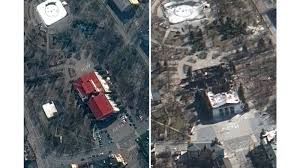
For the April WEP challenge for the Year of Music - A Hard Rain's Gonna Fall - I knew I was going to write from the POV of someone in that Mariupol theatre where at least 300 people died while sheltering, thinking the word 'Child' at both entrances would save them from the Russian missiles. Fat chance. Anyway, after reading the first-person accounts from people hiding there and in similar places, I studied the photographs that emerged and I imagined being one of those unfortunates and wrote the following story using a fully immersive POV. Why I'm reposting is that there were very few readers as the WEP numbers were down for whatever reason and virtually no one else came by. I know April is an impossibly busy blogger month. So, forgive me for wanting my story to reach a wider audience than I had in April. 

So, with a few edits, written from the heart, here is ...


Ode to the Innocents


I can’t move, I can’t think, I’m freezing.

Anastasiya gathers her overcoat around her, pulls her woollen hat over her ears, wriggles her toes in her stiff boots. There’s no room to stamp her feet. Bodies press against her from all sides.

Why didn’t she run when she had the chance? Was it her love for her country? Her reluctance to be parted from her remaining relatives, especially her brother who returned from Poland to fight after her mother died in the bombing? She has no answers, not even to herself. Glory to Ukraine.

Lord only knows how long she’s sat upright, huddled, with nothing to lean against. Her back feels like it’s breaking. But she's grateful to have escaped here after the bombing of her apartment block. Yelling and screaming, along with hundreds of her neighbours, empty handed, she’d stumbled through broken earth, tripped on broken glass, only just avoided being torn apart by sharp steel girders lying half buried in her path. But she made it here ...

... to the shelter. Dark as pitch. It separates them all as surely as it binds them together. She’s been inside the shelter for hours, days, weeks, she’s lost track of everything but the gradual warming of the atmosphere from the press of too many bodies against the coolness of the cement floor, the weeping walls. Their collective breath in the chilly room forms a moving fog. The faint aroma of fragrance, the smell of beer breath, the bitterness of stale cigarettes is by now woven into their clothes, hair and skin. Oh, how she longs for sunshine, for fresh air.

The mournful sharp notes of a Jew’s harp played by an old man sets her teeth on edge even though it’s no more than a whisper. The vibrations resonate with the beat of her heart. Her grandfather played the Jew’s harp. Now her grandfather is dead after picking up a gun and slipping away one night to fight the enemy. Her father played, but she has no idea if he’s dead or alive. The last she heard he was in an operation to take back a city in the south. Her brother was learning to play before war broke out. She wonders if he'll ever place it to his lips again. Glory to Ukraine.

She’s hyper conscious of every movement, each and every sound – the whimpering of small children and beloved dogs, the snores of the elderly exhausted by the sharp turn their lives have taken in a short time, the rustle of clothing as people try in vain to get more comfortable, the faint click of knitting needles as a middle-aged woman fashions a colourful  scarf to keep her son warm at the battlefront, the fragile stillness of the woman sitting nearby as she holds her breath, afraid to exhale.

Then … air raid sirens … muffled gasps as the missile sings its death song overhead.

The ground shudders. Is it only the weight of tanks and trucks on the roads escalating the ferocity of sound, drowning out the knitter’s coughing fit and the elderly gentleman’s incoherent cries. She clenches her teeth, holds her breath, counts, waits for the next blast and the weight of the debris and soil as it presses down, weighs down their flesh, levels the building as they all disappear further beneath the earth. She imagines being found days, weeks later, her stiff arm protruding from the rubble, her legs snapped like twigs, captured for the evening news. The two lovers who embrace at her feet, will their arms still be locked around each other? Their desperate lips clamped together for eternity? What of the bundles of clothes and prized possessions brought to the shelter for safekeeping, will they become scorched artefacts in this communal tomb?

Shaking her head, she tries to dispel the gruesome images which isn’t helped by the laments from those awake who fear what’s about to happen. Glory to Ukraine.

I can’t die. I won’t die. I have my whole life before me. God help me, I’m only sixteen.

There’s nowhere to run. She clenches her fists to her stomach. This is it.

The atmosphere thickens. Her breathing intensifies. Opening her stinging eyes, she sees flecks of ash skittering around her head. If she pokes out her tongue, she’ll taste death. She struggles to think of something else, to grasp hold of a thread of something normal, the way it was only weeks ago. Not this deepest, darkest hell they've fallen into. This slow death. She wills the thudding of her blood and muscle to cease, to force her heart back to its normal size and her breathing to slow enough to stop overtaking her thoughts.

She smells the fear all around her in the dank perspiration of the terrified inmates of this prison which had offered the last vestige of hope in a city being pummelled into the ground. She senses it in the unease that has overtaken their shared space. Hears it in the desperate prayers as people call on God to deliver them. But God has turned his back on this hideous war where once again it’s man against man. When will they ever learn, she imagines Him asking?

Her legs are numb and her back locked rigid, her muscles set in permanent contraction. Head between her knees, she shivers uncontrollably, she cries for her mother. Amongst hundreds, she has never felt so alone. The earth is so cold and pressed against her so tightly that the pain begins to spread through her like the fire that surely rages overhead, engulfing the shattered building where she shelters.

“Glory to Ukraine!” The cry is so loud she wonders if it will rally them in their last moments. “Glory to Ukraine!"  Louder. Louder. She joins in. “Glory to Ukraine!” She screams in anger for her beautiful country, decimated by war, by hatred, by brutality.

It grows eerily quiet. Above their heads, the cement girders snap, falling, burying them. Her mouth fills with debris. With her last breath, she can see in her mind’s eye the latest video from her President.  

“We are here with you,” President Zelensky said. “Glory to Ukraine.”


The WEP winners for the Hard Rain's Gonna Fall prompt have just been announced: We have 
Carrie Ann Golden for her wonderful poem, Tears in the Rain, for which she wins an online writing course with Nas Dean, Shannon Lawrence, Runner Up, and Hilary Melton-Butcher, Encouragement Award.


If you'd like to write an entry for WEP, how about joining us in June? A wide-open prompt.


June's prompt is based on the song, Please Read the Letter by Robert Plant and Alison Krauss - a break up song and a moving plea for understanding at the termination of a relationship.

What's not to like?

I'd love to read your comment after reading my Ukraine story - good or bad reaction?

Denise


Wednesday, 20 April 2022

#WEP April challenge - A Hard Rain's Gonna Fall - Ode to the Innocents - Glory to Ukraine.

 Hello all!

It's time for the WEP April 2022 challenge. This month for the Year of Music, we have Bob Dylan's A Hard Rain's Gonna Fall.


From the blurb, courtesy of Nilanjana Bose.

A Hard Rain’s Gonna Fall, described as the ‘most idiosyncratic protest song ever written.' Bob Dylan, the Nobel Laureate and another 60's icon, wrote, composed and sung it in 1962 when he was only 21. It’s been covered by many artistes including Pete Seeger, Joan Baez and has never really stopped being sung ever since.

The form is modelled on the traditional ballad in the question and answer format, the themes being human suffering – pollution, warfare, isolation, angst. Sixty years after Dylan presented it at a performance at Carnegie Hall, the lyrics are striking in that how relevant they are today, how contemporary their feel and the depth of their appeal. Read more about the song here and here.

Unsurprisingly, I've gone with the human suffering angle. The #flash wrote itself. Sadly.


Ode to the Innocents


I can’t move, I can’t think, I’m freezing.

Anastasiya gathers her overcoat around her, pulls her woollen hat over her ears, wriggles her toes in her stiff boots. There’s no room to stamp her feet. Bodies press against her from all sides.

Why didn’t she run when she had the chance? Was it her love for her country? Her reluctance to be parted from her remaining relatives, especially her brother who returned from Poland to fight after her mother died in the bombing. She has no answers, not even to herself. Glory to Ukraine.

Lord only knows how long she’s sat upright, huddled, with nothing to lean against. Her back feels like it’s breaking. But she's grateful to have escaped here after the bombing of her apartment block. Yelling and screaming, along with hundreds of her neighbours, empty handed, she’d stumbled through broken earth, tripped on broken glass, only just avoided being torn apart by sharp steel girders lying half buried in her path. But she made it here.

To the shelter. Dark as pitch. It separates them all as surely as it binds them together. She’s been inside the shelter for hours, days, weeks, she’s lost track of everything but the gradual warming of the atmosphere from the press of too many bodies against the coolness of the cement floor, the weeping walls. Their collective breath in the chilly room forms a moving fog. The faint aroma of fragrance, the smell of beer breath, the bitterness of stale cigarettes is by now woven into their clothes, hair and skin.

The mournful sharp notes of a Jew’s harp played by an old man sets her teeth on edge even though it’s no more than a whisper. The vibrations resonate with the beat of her heart. Her grandfather played the Jew’s harp. Now her grandfather is dead. Her father played, but she has no idea if he’s dead or alive. The last she heard he was in an operation to take back a city in the south. Her brother was learning to play before war broke out. She wonders if he'll ever place it to his lips again. Glory to Ukraine.

She’s hyper conscious of every movement, each and every sound – the whimpering of small children and beloved dogs, the snores of the elderly exhausted by the sharp turn their lives have taken in a short time, the rustle of clothing as people try in vain to get more comfortable, the faint click of knitting needles as a middle-aged woman fashions a colourful  scarf to keep her son warm at the battlefront, the fragile stillness of the woman sitting nearby as she holds her breath, afraid to exhale.

Then … air raid sirens … muffled gasps as the missile sings its death song overhead.

The ground shudders. Is it only the weight of tanks and trucks on the roads escalating the ferocity of sound, drowning out the knitter’s coughing fit and the elderly gentleman’s incoherent cries. She clenches her teeth, holds her breath, counts, waits for the next blast and the weight of the debris and soil as it presses down, weighs down their flesh, levels the building as they all disappear further beneath the earth. She imagines being found days, weeks later, her stiff arm protruding from the rubble, her legs snapped like twigs, captured for the evening news. The two lovers who embrace at her feet, will their arms still be locked around each other? Their desperate lips clamped together for eternity? What about all the bundles of clothes and prized possessions brought to the shelter for safekeeping, will they become lonely artefacts in this communal tomb?

Shaking her head, she tries to dispel the gruesome images which isn’t helped by the laments from those awake who know what’s about to happen. Glory to Ukraine.

I can’t die. I won’t die. I have my whole life before me. God help me, I’m only sixteen.

There’s nowhere to run. This is it.

The atmosphere thickens. Her breathing intensifies. Opening her stinging eyes, she sees flecks of ash skittering around their heads. If she pokes out her tongue, she’ll taste death. She struggles to think of something else, to grasp hold of a thread of something normal. Not this deepest, darkest hell. This slow death. She wills the thudding of her blood and muscle to cease, to force her heart back to its normal size and her breathing to slow enough to stop overtaking her thoughts.

She smells the fear all around her in the dank perspiration of the terrified inmates of this prison which had offered the last vestige of hope in a city being pummelled into the ground. She senses it in the unease that has overtaken their shared space. Hears it in the desperate prayers as people call on God to deliver them. But God has turned his back on this hideous war where once again it’s man against man. When will they ever learn, she imagines Him asking?

Her legs are numb now and her back locked rigid, her muscles set in permanent contraction. Head between her knees, she shivers uncontrollably. The earth is so cold and pressed against her so tightly that the pain begins to spread through her like the fire that surely rages overhead, engulfing the shattered building where she shelters.

“Glory to Ukraine!” The cry is so loud she wonders if it will rally them all in their last moments.

It grows eerily quiet. Above their heads, the cement girders snap, falling, burying them. Her mouth fills with debris. With her last breath, she can see in her mind’s eye the latest video from her President.  

“We are here with you,” President Zelensky said. “Glory to Ukraine.”


 TAGLINE: All too often, hard rain leaves victims in its wake.


WORDS: 919

FCA

This was difficult to write. Maybe it lacks editing because I found it so painful to re-read. 

Please click on the names in my sidebar for more takes on the prompt, A Hard Rain's Gonna Fall.

And if this prompt stumped you, start thinking about the June prompt, 


Thanks for coming by and supporting the writers at WEP.

Wednesday, 6 April 2022

#IWSG April 2022 - #amwriting too much?! Rewrites, new story, new book.

 Hello all!

Time for the April #IWSG. I've been so busy with writing, I hardly noticed March slipping by.


Alex's awesome co-hosts for the April posting of the IWSG are Joylene Nowell Butler, Jemima Pett, Patricia Josephine, Louise - Fundy Blue, and Kim Lajevardi! Thanks ladies!

I'll skip the audiobook question as that's far from my reach at the moment. I know they're popular - not with me - give me a book to read any day, but I know lots of people love them, and for some, it's the only way they can fit reading into their busy schedule. Someone who is blind, or partially blind, must thing audiobooks are the best!

I'll be so interested in reading the posts and see what everyone thinks.

Skipping the audiobook question means I have to think of something else to say. Hmm. 

My biggest faux pas for the month of March was dawdling over rewrites for Betrayed, then finding out it's been chosen for the #iwsgbook club for April. I quickly published the revisions (which aren't live yet), but not the new cover which is not yet ready. 

Maybe my problem is I do too many things at once - as I'm traveling for most of April, I've been getting ahead of myself. I've been writing a #flashfiction for the WEP challenge - A Hard Rain's Gonna Fall, rewriting Betrayed, my beloved vampires, writing my next Paris foodie novel and getting feedback from my critique partners along with actually giving some time to my family and friends, LOL. 

I think that's enough.

Hope you'll join us for the WEP challenge for April which is held alongside the busyness of the A - Z Challenge. Some make it work for them by using the same letter.


A Hard Rain’s Gonna Fall, described as the ‘most idiosyncratic protest song ever written. Bob Dylan, the Nobel Laureate and another 60's icon, wrote, composed and sung it in 1962 when he was only 21. It’s been covered by many artistes including Pete Seeger, Joan Baez and has never really stopped being sung ever since.

The form is modelled on the traditional ballad in the question and answer format, the themes being human suffering – pollution, warfare, isolation, angst. Sixty years after Dylan presented it at a performance at Carnegie Hall, the lyrics are striking in that how relevant they are today, how contemporary their feel and the depth of their appeal. Read more about the song here and here.

Love to read your response to this ever-popular Bob Dylan ballad.