Showing posts with label #war. Show all posts

Wednesday, 4 May 2022

#IWSG April 2022 - Writing from the heart - Ode to the Innocents - WEP Winners.

Hello there! Here we are again, time for the May IWSG. Hilarious how fast this year is going. 


The awesome co-hosts for the May 4 posting of the IWSG are Kim Elliott, Melissa Maygrove, Chemist Ken, Lee Lowery, and Nancy Gideon!

  Be sure to visit the

Insecure Writer’s Support Group Website!!! 

Each month there is an optional question:

May 4 question - It's the best of times; it's the worst of times. What are your writer highs (the good times)? And what are your writer lows (the crappy times)?

I'm going to do the question - sorta. To me, one of the highs of the writing life is writing from the heart. That's different to the sometimes cold-hearted plotting we do for a short story or a full-length novel. One of the reasons I love WEP is that I get to fire off a from-the-heart flash fiction in response to a prompt every second month. Really keeps me on my toes and I value the feedback from the WEP writers and anyone else who comes by and reads.

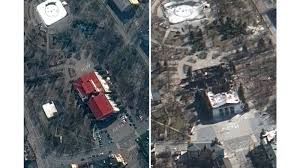
For the April WEP challenge for the Year of Music - A Hard Rain's Gonna Fall - I knew I was going to write from the POV of someone in that Mariupol theatre where at least 300 people died while sheltering, thinking the word 'Child' at both entrances would save them from the Russian missiles. Fat chance. Anyway, after reading the first-person accounts from people hiding there and in similar places, I studied the photographs that emerged and I imagined being one of those unfortunates and wrote the following story using a fully immersive POV. Why I'm reposting is that there were very few readers as the WEP numbers were down for whatever reason and virtually no one else came by. I know April is an impossibly busy blogger month. So, forgive me for wanting my story to reach a wider audience than I had in April. 

So, with a few edits, written from the heart, here is ...


Ode to the Innocents


I can’t move, I can’t think, I’m freezing.

Anastasiya gathers her overcoat around her, pulls her woollen hat over her ears, wriggles her toes in her stiff boots. There’s no room to stamp her feet. Bodies press against her from all sides.

Why didn’t she run when she had the chance? Was it her love for her country? Her reluctance to be parted from her remaining relatives, especially her brother who returned from Poland to fight after her mother died in the bombing? She has no answers, not even to herself. Glory to Ukraine.

Lord only knows how long she’s sat upright, huddled, with nothing to lean against. Her back feels like it’s breaking. But she's grateful to have escaped here after the bombing of her apartment block. Yelling and screaming, along with hundreds of her neighbours, empty handed, she’d stumbled through broken earth, tripped on broken glass, only just avoided being torn apart by sharp steel girders lying half buried in her path. But she made it here ...

... to the shelter. Dark as pitch. It separates them all as surely as it binds them together. She’s been inside the shelter for hours, days, weeks, she’s lost track of everything but the gradual warming of the atmosphere from the press of too many bodies against the coolness of the cement floor, the weeping walls. Their collective breath in the chilly room forms a moving fog. The faint aroma of fragrance, the smell of beer breath, the bitterness of stale cigarettes is by now woven into their clothes, hair and skin. Oh, how she longs for sunshine, for fresh air.

The mournful sharp notes of a Jew’s harp played by an old man sets her teeth on edge even though it’s no more than a whisper. The vibrations resonate with the beat of her heart. Her grandfather played the Jew’s harp. Now her grandfather is dead after picking up a gun and slipping away one night to fight the enemy. Her father played, but she has no idea if he’s dead or alive. The last she heard he was in an operation to take back a city in the south. Her brother was learning to play before war broke out. She wonders if he'll ever place it to his lips again. Glory to Ukraine.

She’s hyper conscious of every movement, each and every sound – the whimpering of small children and beloved dogs, the snores of the elderly exhausted by the sharp turn their lives have taken in a short time, the rustle of clothing as people try in vain to get more comfortable, the faint click of knitting needles as a middle-aged woman fashions a colourful  scarf to keep her son warm at the battlefront, the fragile stillness of the woman sitting nearby as she holds her breath, afraid to exhale.

Then … air raid sirens … muffled gasps as the missile sings its death song overhead.

The ground shudders. Is it only the weight of tanks and trucks on the roads escalating the ferocity of sound, drowning out the knitter’s coughing fit and the elderly gentleman’s incoherent cries. She clenches her teeth, holds her breath, counts, waits for the next blast and the weight of the debris and soil as it presses down, weighs down their flesh, levels the building as they all disappear further beneath the earth. She imagines being found days, weeks later, her stiff arm protruding from the rubble, her legs snapped like twigs, captured for the evening news. The two lovers who embrace at her feet, will their arms still be locked around each other? Their desperate lips clamped together for eternity? What of the bundles of clothes and prized possessions brought to the shelter for safekeeping, will they become scorched artefacts in this communal tomb?

Shaking her head, she tries to dispel the gruesome images which isn’t helped by the laments from those awake who fear what’s about to happen. Glory to Ukraine.

I can’t die. I won’t die. I have my whole life before me. God help me, I’m only sixteen.

There’s nowhere to run. She clenches her fists to her stomach. This is it.

The atmosphere thickens. Her breathing intensifies. Opening her stinging eyes, she sees flecks of ash skittering around her head. If she pokes out her tongue, she’ll taste death. She struggles to think of something else, to grasp hold of a thread of something normal, the way it was only weeks ago. Not this deepest, darkest hell they've fallen into. This slow death. She wills the thudding of her blood and muscle to cease, to force her heart back to its normal size and her breathing to slow enough to stop overtaking her thoughts.

She smells the fear all around her in the dank perspiration of the terrified inmates of this prison which had offered the last vestige of hope in a city being pummelled into the ground. She senses it in the unease that has overtaken their shared space. Hears it in the desperate prayers as people call on God to deliver them. But God has turned his back on this hideous war where once again it’s man against man. When will they ever learn, she imagines Him asking?

Her legs are numb and her back locked rigid, her muscles set in permanent contraction. Head between her knees, she shivers uncontrollably, she cries for her mother. Amongst hundreds, she has never felt so alone. The earth is so cold and pressed against her so tightly that the pain begins to spread through her like the fire that surely rages overhead, engulfing the shattered building where she shelters.

“Glory to Ukraine!” The cry is so loud she wonders if it will rally them in their last moments. “Glory to Ukraine!"  Louder. Louder. She joins in. “Glory to Ukraine!” She screams in anger for her beautiful country, decimated by war, by hatred, by brutality.

It grows eerily quiet. Above their heads, the cement girders snap, falling, burying them. Her mouth fills with debris. With her last breath, she can see in her mind’s eye the latest video from her President.  

“We are here with you,” President Zelensky said. “Glory to Ukraine.”


The WEP winners for the Hard Rain's Gonna Fall prompt have just been announced: We have 
Carrie Ann Golden for her wonderful poem, Tears in the Rain, for which she wins an online writing course with Nas Dean, Shannon Lawrence, Runner Up, and Hilary Melton-Butcher, Encouragement Award.


If you'd like to write an entry for WEP, how about joining us in June? A wide-open prompt.


June's prompt is based on the song, Please Read the Letter by Robert Plant and Alison Krauss - a break up song and a moving plea for understanding at the termination of a relationship.

What's not to like?

I'd love to read your comment after reading my Ukraine story - good or bad reaction?

Denise


Wednesday, 20 October 2021

#WEP #OCTOBER #CHALLENGE for #TheScream - My #flashfiction - 'The Child'

 Hello friends!

Two months have gone by since the last WEP. Here we are again, nearing the end of the year. 

October is our scream-fest, but it doesn't have to be if horror isn't your thing. 

Talking about horror, most of us watched in horror at the allies' retreat from Afghanistan after 20 years of occupation. Images of those poor people running in front of departing aeroplanes is seared into our collective memory. 

I'm telling this story before it's completely out of date. The story of an Australian soldier who failed to understand  the challenges of going on patrol in Kandahar province, the area where the Australians were stationed.

I gleaned most of this story through research (I've written a book set in Afghanistan, as yet unpublished) and sprinkled it with a lot of imagination, thinking it suits The Scream for sure.


­­THE CHILD

 My first mission in Afghanistan. As we marched out in single file, my head thumped with the headache from hell. Ahead, the desert, pitch-black, silent. The only sound the Call to Prayer ringing across the Baluchi Valley, punctuating the silence with staccato bursts. The feral dogs joined in and soon their barking matched the cacophony of sound.

 I struggled through cool sand, so thick around my ankles it sucked at my regulation boots.

 I followed the soldier in front of me, his form a shadow in the darkness. Exhaustion threatened to overwhelm me. I’d had no sleep the night before, so terrified was I at the spectre of marching into the unfamiliar mountains and deserts of Kandahar province in one of the most treacherous countries on earth. The lead soldiers were obviously a lot fitter than I, a newly arrived recruit. I fought the sand – my knees screamed, my thighs burned, my lungs were on fire.

 I was in another world, a world where I’d been warned that nothing was as it appeared.

 Who was friend?

Who was foe?

 Making the wrong choice could result in death.

 I was on covert foot patrol with Australian and Afghan soldiers.  We were outside the wire, scaling rocky hills under the pressing weight of body armor and supplies. The altitude was an unwelcome foe. I hadn’t had time to acclimatise to the blistering temperatures.

 I tripped and fell onto my knees, thankful that the sand cushioned the fall.

 No one stopped to help me. On patrol, to stop would jeopardise the mission. I dragged my feet from the sand and hurried back to my position. No princesses here! In uniform everyone is treated the same.

 How I prayed for sunrise.

~*~

 After what seemed like hours, the lead soldier signalled with his crooked finger, pointing to our surroundings, then holding a finger to his lips. Word whispered down the line. Silence. Kuchi camps. Bedouins.

 We moved on again, soundlessly into the night, every sense screaming.

 ‘Police checkpoint’, someone whispered.

 In briefing I’d been told even if we had nothing to hide, these checkpoints were best avoided.

 No one even breathed as we crouched and duck-walked close to the ground, swinging our weapons from side to side, holding tight, hoping to elude the inevitable searchlight.

 A screech, a huge spotlight shone down on us, blinding us in white light.

­­Someone screamed ‘Drescht! (Stop!)’. We froze, startled deer, clutching weapons to our chests.

 Two policemen yelled at us in a language I didn’t understand, but the meaning was clear. They motioned us to our feet.

 We stood. Statues. I fought to control my bladder. We could be shot right where we stood.

 Our leader yelled, ‘Australians!’

 The police muttered to each other, came close, pointed weapons in our faces, checked papers, nodded, then motioned us on.

 Shaken, we headed further into the desert darkness.

 ‘The guards were skittish because just yesterday they confronted insurgents in Kakarak across the river. Shots were exchanged,’ hissed the soldier behind me.

 ‘Thanks,’ I muttered, but it didn’t comfort me. My eyes saw insurgents behind the rocks, across the river, in the mountains.

 I was weak with terror after my first date with danger. My legs collapsed. I fell out of line. Sat down in a dry gully, sucked air into my parched lungs.

 Back on my feet, I rushed to join the line again, terrified of being left behind.

                                                                   ~*~

 Sunrise.

 A glorious orange orb broke over the mountains, into the valley, and lit up the shock of green land we were heading toward, the green belt.

 In the near distance I saw a small boy, no more than six years old, shepherding his family’s goats through the pastures. He could be my son, but my little boy slept in cosy comfort, surrounded by stuffed toys and his father’s love. More children hid shyly in the doorways of simple rammed-earth homes.

 Watching. Watching. Watching.

 First stop. A meeting with the elders of the tribe. They were guarded, constantly looking to see if they were being observed. Not everyone would be happy to see them talking to Australian soldiers. They risked death for having a conversation with us. We kept it short to minimise the danger, then moved on.

 Over broken bricked walls, through crumbling aqueducts, we waded towards the village of Sorkh Morghab where coalition forces had built a school, market and medical centre. Yet, despite all our efforts, I’d been told it was hostile.

 We wandered through the village, apparently casually, weapons held across our chests, trigger fingers ready. We progressed through the market area, where men and young boys showed us their shops and tried to sell me a burqa. I was just a woman, one who needed to cover herself.

 One little boy approached me, hand outstretched. He, too, about six years old. I thought again of my son, but this little boy’s eyes reflected a man, an angry man. I shivered at the hate in those big black eyes.

 A soldier pulled me backward. ‘Step away,’ he said. ‘Nothing is as it seems.’

 I brushed him off. Reached into my pocket. Pulled out two lollies for the poor little boy. He was only a child.

 The child smiled a toothy smile, but it didn’t reach his old man eyes. He dived into his pocket and pulled out what looked like a large apple.

 We smiled at each other in what was a very easy but powerful gesture. No words needed.

 I saw the apple had gone black with age and looked rough and mouldy. It looked like a … it couldn’t be...

                                                                  ~*~

‘Nooooooooooo …’ someone screamed, a voice full of pain and regret.

 I felt the fire on my lips, the fire in my belly.

 I tasted the fire as it burned down my throat.

 I heard voices and the staccato bursts of gunfire.

 I heard the cry of a child.

 Then I heard … nothing.


THE END


TAGLINE: Trust is not a given. Sometimes you reach for an apple and are handed a grenade. 


WORDS: 997
FCA


Thank you for reading my entry for The Scream 

Please click on names in my sidebar to read more entries in this writing competition.

Please consider joining us for the final challenge for the year - Narcissus